
Saher Hiba Khan, a journalist, was at a close friend’s place when her friend’s brother started talking about Muslims. “Ye log aise hi hain,” he said. Then he remembered Saher was in the room. “All I am saying is kuch log aise hote hain.”
Saher remembers the awkwardness of the moment, and the laughter she couldn’t quite allow herself.
Yeh log (these people) had become kuch log (some people) in half a second. The sentence had changed but the belief behind it hadn’t.
Where do you even pick that up?
Not necessarily from never meeting us. Knowing a Muslim colleague, classmate or neighbour doesn’t automatically mean seeing them without prejudice. Our ideas about people come from all sorts of places: family, friends, conversations, news, social media and, of course, cinema. The stories we consume don’t exist in isolation from the world we live in. They give us images, associations and familiar ways of looking at people.
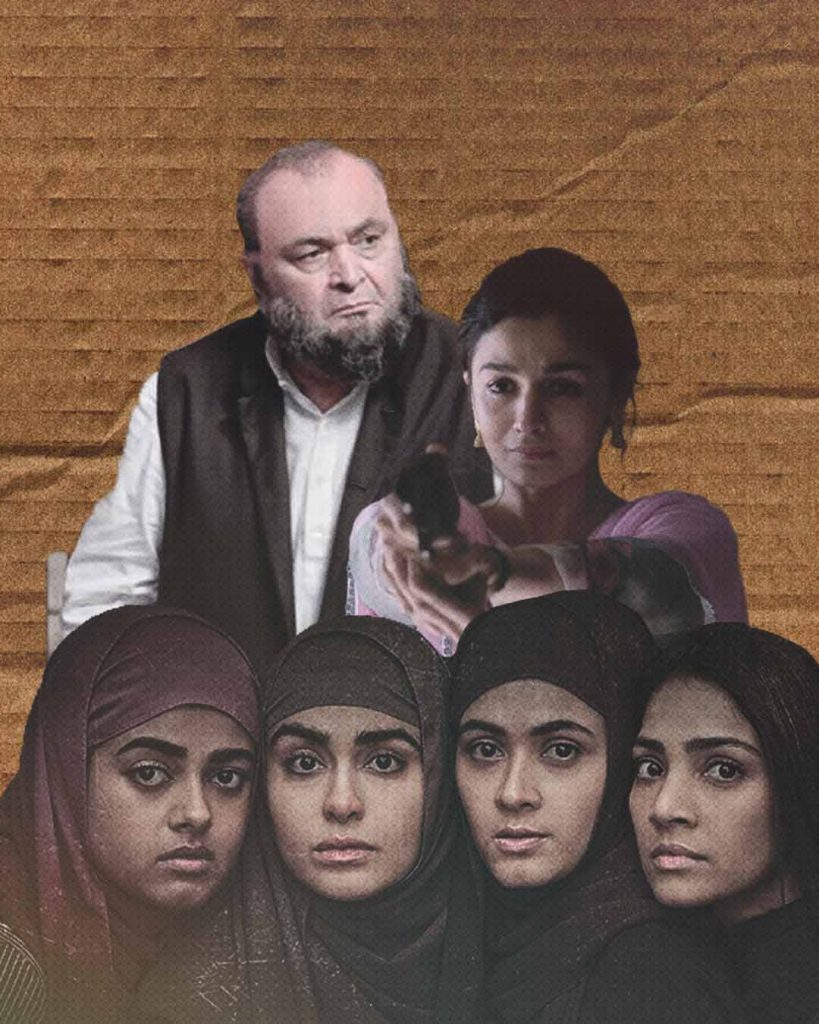
And Hindi cinema, especially in the last decade, has been giving Muslims a particularly narrow set of images.
The problem isn’t that Muslim characters are villains. Cinema should be allowed to have Muslim villains, just as it has Hindu villains, Christian villains and villains who don’t believe in anything at all. The problem begins when a character’s religion stops being incidental to the story and becomes part of the explanation for why we should fear them.
Think about My Name Is Khan (2010). Rizwan Khan is a Muslim man who falls in love with Mandira, a Hindu single mother. They marry, build a life together and raise her son. Religion is hardly a source of conflict in their relationship until the September 11 attacks change how the world sees people with Muslim names. When Mandira’s son is killed in a racially motivated attack, she blames Rizwan’s surname for making him a target. Rizwan sets out across America to tell the President that he is not a terrorist.
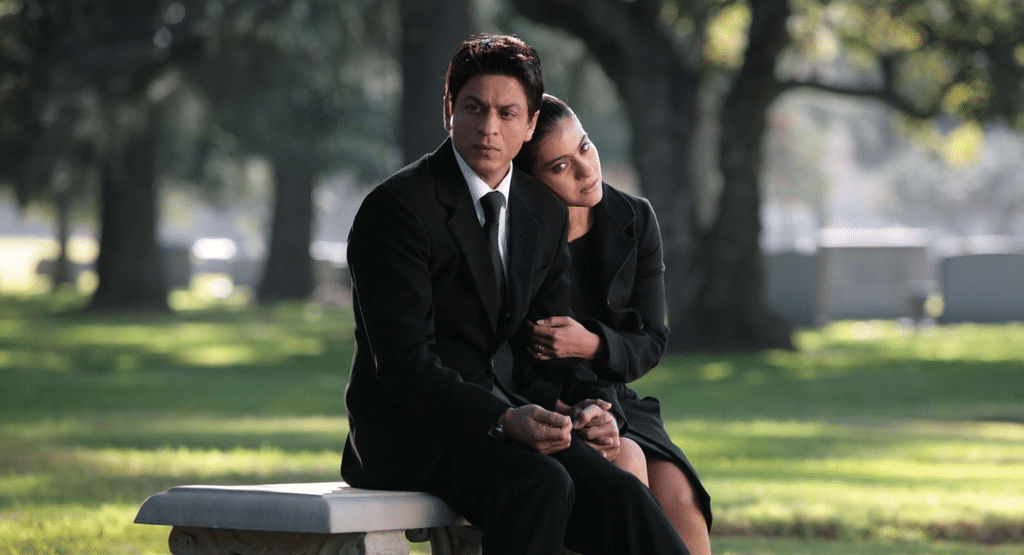
The film makes prejudice its subject. It asks us to see a man being punished for an identity he cannot separate from himself, and to recognise the absurdity of having to prove his innocence simply because his name is Khan. It is also, tellingly, a film in which a Muslim man must cross a continent to prove his innocence.
Now consider The Kerala Story (2023).
The film follows Shalini, a Hindu woman who is manipulated into converting to Islam and eventually drawn into ISIS. Her Muslim roommate, Asifa, is presented as part of the network that facilitates this process. Along the way, Shalini is introduced to religious practices, including namaz and the hijab, as part of her transformation.
There is a legitimate story to tell about coercion, radicalisation and the exploitation of vulnerable women. But look at how this film constructs that journey: everyday markers of Muslim identity are placed in a visual sequence that ends in extremism. It also presented itself as based on real events, while its central claims about numbers of converts were widely disputed. Religious practice, romantic relationships and conversion are placed within the same narrative of manipulation.
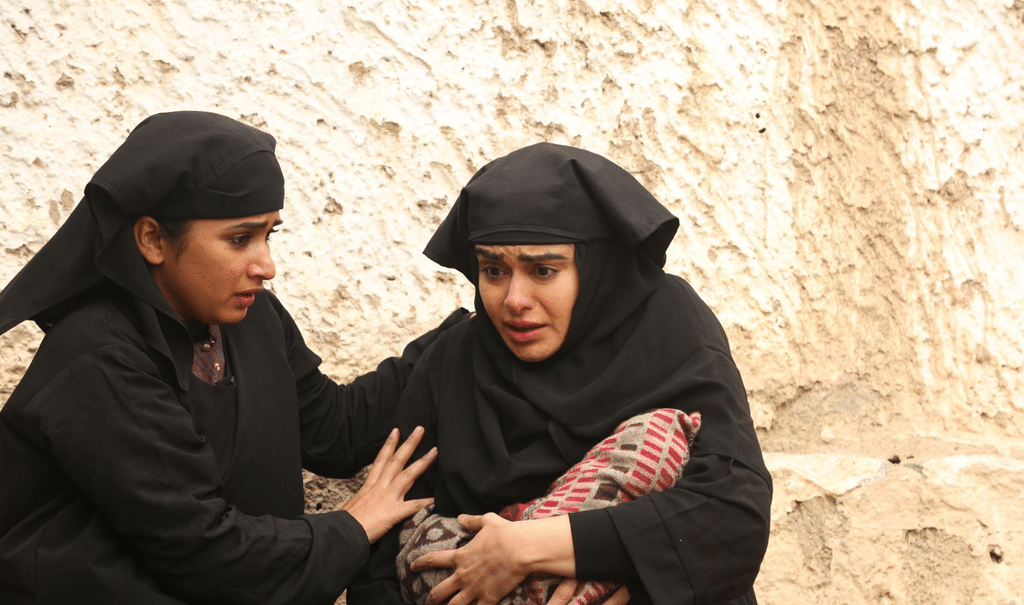
The distinction matters. A person can be radicalised without the everyday practices of their religion becoming evidence of radicalisation. A hijab is not a recruitment strategy. Namaz is not a warning sign. And a Muslim man expressing romantic interest in a woman is not, by itself, a reason to suspect him.
The two films are not like-for-like, and that is part of the point: one makes a claim about a man, the other a claim about a community. One film asks you to recognise prejudice against a Muslim man. The other risks teaching you to recognise Muslimness itself as a warning.
Films shouldn’t avoid difficult subjects or that oppression within Muslim communities go unexamined. It exists, as it does in every community. There are stories about coercion, misogyny, conservative family structures and religious extremism that deserve to be told. But examining a problem within a community is not the same as making the community itself look like the problem.
You can see why this distinction matters when you look at what happens in a cinema hall. Audiences have always cheered when villains get their comeuppance. They did it for Gabbar and Mogambo. Neither man’s menace was ever explained by his faith.
Now imagine a film where a villain’s religious identity is repeatedly tied to his menace. His beard, skullcap, religious slogans and mannerisms are established before he even commits an act of violence. Even the background score, with its distinct musical cues, reinforces this association. The audience is being told how to read these markers and what to associate them with.
The applause may be for the hero or the action, but the association has already been made. For a Muslim watching in the audience, that imagery can be harder to shake off long after the credits roll.
There are films that show us a different possibility. Theatre actor Samim points to Gangs of Wasseypur (2012) as an example.
“In Gangs of Wasseypur, they portrayed what a common Muslim family in Wasseypur, Jharkhand, could actually look like. They have their own culture; their everyday choices are all there,” he says.
This is an interesting example precisely because Gangs of Wasseypur is hardly a film about well-behaved people. It is full of criminals, violence, revenge and deeply flawed characters. Its Muslim characters are allowed to be all of these things without their religion automatically becoming the explanation for their behaviour.
Their ambitions, rivalries, family histories and personal choices drive the story. Their Muslim identity is part of their world, not a shortcut to explaining everything wrong with it.
A more recent example is The Great Shamsuddin Family (2025), directed by Anusha Rizvi. The film follows a Muslim family navigating domestic crises, complicated relationships and the anxieties of everyday life. Their religious identity is part of who they are, but it isn’t the only thing the story has to say about them.
But you might not have heard of it. Unlike The Kerala Story, which became a major box-office success and a subject of widespread public conversation, The Great Shamsuddin Family reached audiences through a streaming platform. That gap, between what gets a theatrical push and what quietly streams, is itself part of the story.
That’s what makes the distinction between representation and stereotyping important. A Muslim character doesn’t have to be good to be represented fairly. He just has to be allowed to be a character first.
Ali, a film researcher at the AJK Mass Communication Research Centre, Jamia Millia Islamia, points to another recurring problem: the Muslim character who isn’t a villain but still has to prove that he belongs.
Ali calls this a “fixed cinematic template”. “In the pursuit of being a good Muslim, they often have to get themselves killed to prove their worth and loyalty to the nation,” he says.
Think about what that demands of a character. His patriotism is never simply assumed. He has to demonstrate it, often through an extraordinary act of loyalty or sacrifice. The Hindu hero gets to be a patriot without his religion becoming a question. The Muslim supporting character is sometimes expected to earn the same acceptance.
Chak De! India (2007) is the best-known example. Shah Rukh Khan’s Kabir Khan is branded a traitor and spends the film earning back the nation’s trust.
Why does belonging have to come with a test?
Someone might point out that Hindi cinema’s biggest stars have been Muslim for decades. Shah Rukh Khan has played Raj and Rahul. Salman Khan has played Prem and Radhe. Aamir Khan has played Rancho and Bhuvan. The exceptions are revealing. When Shah Rukh Khan plays a Muslim, as in Chak De! India and My Name Is Khan, the plot is about whether he belongs.
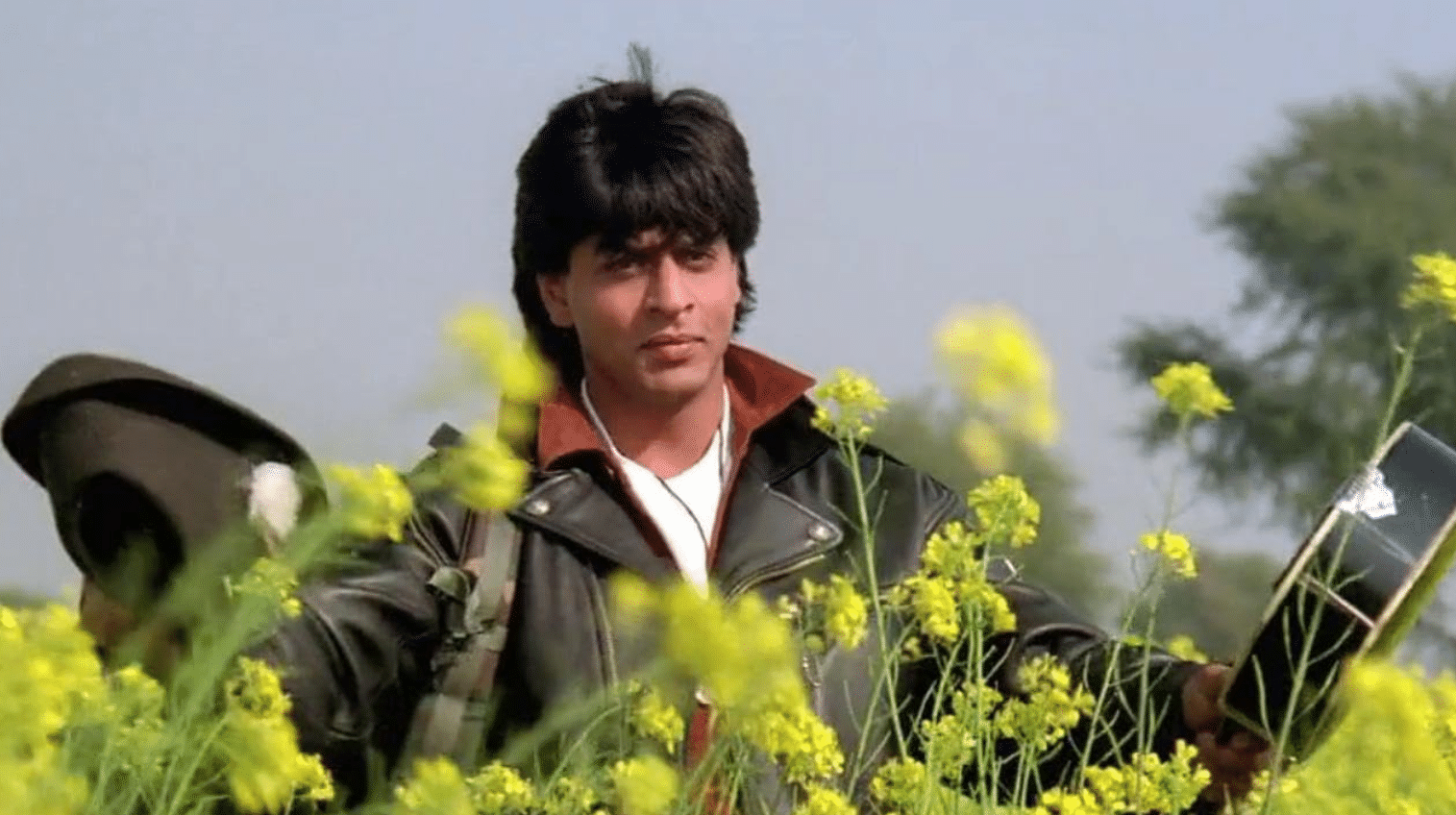
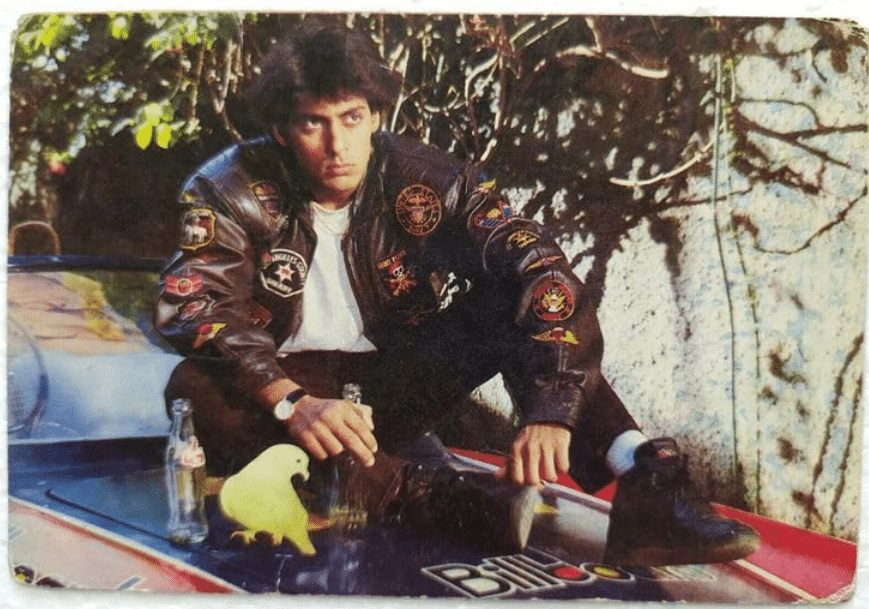
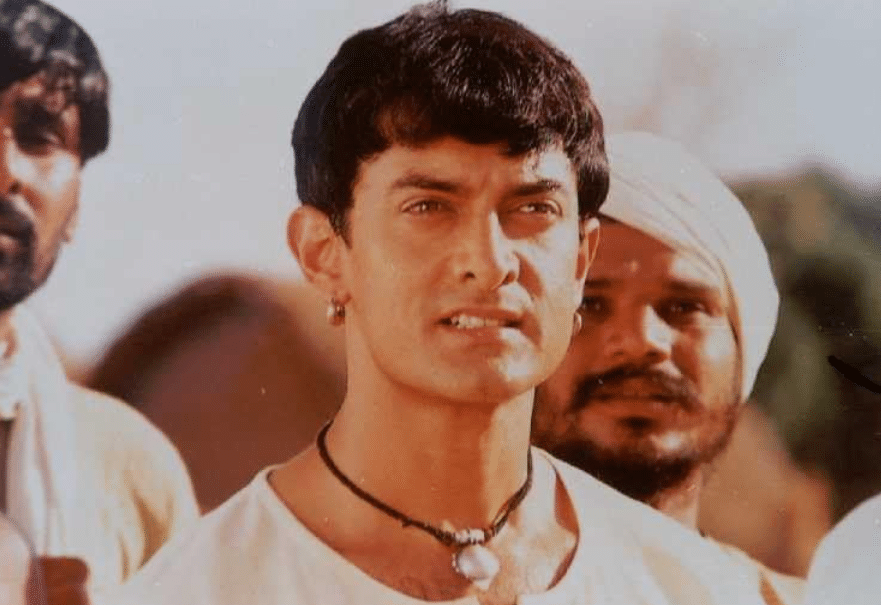
But there’s a difference between Muslim actors being visible in the film industry and Muslim characters being visible on screen. A Muslim face on a poster doesn’t automatically mean a Muslim story in the film. The leading man gets to be the romantic hero, the rebel, the family man or the patriot. Meanwhile, the Muslim character in the background is too often reduced to a handful of familiar roles: the militant, the henchman, the suspicious stranger or the sidekick who proves his loyalty by dying.
Put these portrayals together and the visual vocabulary starts looking familiar: a beard, a skullcap, a hijab, a religious slogan.
And what gets lost in all this is the ordinary Muslim life that rarely makes it into the frame.
Muslims are not outsiders in this country. We don’t exist merely in relation to terrorism, conflict or religious identity, we are part of the ordinary fabric of this country. We work, fall in love, raise children, build businesses, disagree with one another, dream, fail, and begin again. Our lives are not an exception to the Indian experience.
What happens when the same beard, skullcap or hijab is repeatedly associated with danger, on screen and off it? What happens when that association starts showing up beyond the cinema hall?
In February 2023, the Aurangabad Bench of the Bombay High Court issued an interim order in Sayed Usama v. State of Maharashtra restraining police, until the next hearing, from conducting mock drills that depicted members of a particular community as terrorists. The petition had challenged drills in which people wearing attire associated with Muslim men and shouting religious slogans were allegedly portrayed as terrorists.
No evidence ties those drills to any film. But the two draw on the same visual shorthand. When religious markers repeatedly signal a threat, the association does not necessarily remain inside fiction.
The stakes are not abstract. Saher’s friend’s brother is one example of how prejudice surfaces in everyday conversations. The police mock drill is another example of how religious identity can be used to construct the image of a threat. These are not the same thing, and one cannot be said to have caused the other. But both reveal what happens when an entire community is viewed through a narrow set of assumptions.
For a long time, I thought the answer was better heroes. Give us a Muslim doctor, a Muslim soldier, a Muslim who wins the World Cup. Let audiences see Muslims as successful, patriotic and accomplished.
But even that has its limits. The exceptional Muslim hero is still exceptional. He is still being asked to demonstrate why he deserves a place in the story. It is the same demand, just presented in a more flattering costume.
When I think about the Hindi films I grew up watching, what strikes me most isn’t simply how Muslims are portrayed. It’s how rarely we’re allowed to be ordinary.
Let us be the character who’s bad at their job. The one who’s late, who’s funny, who’s annoying, who’s forgettable. The one nobody in the hall has anything to say about because they are just a character in a story.
Then the next time someone at a dinner table starts a sentence with ye log, there’s no film left to finish it for him.