
Three centuries ago, people told the first stories of beings with impossible strength: gods, titans, monsters. They were warnings, wishes, and ways of making sense of a world that was chaotic and cruel.
Three decades ago, superheroes took their place: vigilantes, orphaned billionaires, aliens in capes, radioactive teenagers.
Three years ago, (four) a new regime was announced to take over DC’s film and television future, even as a film from the old one sat in post-production for release the following summer.
Three months ago, last year at the same time, James Gunn’s Superman arrived in a blaze of primary colours.
Three weeks ago, a new regime was announced to take over DC’s film and television future, even as a film from the old one sat in post-production for release next summer.
Three days ago, I began writing this piece, trying to drown my pain in Diet Coke, as a DC fan who doesn’t drink. Being a DC fan, I can report, is hard in this economy.
For the uninitiated, a quick primer. DC is the Warner Bros.-owned comic-book company behind Superman, Batman, and Wonder Woman. It is Marvel’s great rival, the other half of the superhero duopoly. In 2022, Warner handed DC Studios, its film and television arm, to James Gunn (the man who made Guardians of the Galaxy a hit for Marvel) and his producing partner Peter Safran. Their brief was to build one connected universe, with a plan, after years of patchy results.
That was not long ago, and so, with their ouster, I am experiencing a serious case of déjà vu. On 1 December, Gunn and Safran give way to Jeremy Latcham, a Marvel veteran who joined that studio in 2004. He will be president and chief creative officer. The Ringer’s Ben Lindbergh points out that until Monday, Latcham didn’t have a Wikipedia page. Now he has a universe, which is a faster rise than most gods manage.
He also has an inheritance, which should worry him, as it does most of the DC fandom. Gunn took over with The Flash, Blue Beetle and Batgirl already deep in production, orphans of a regime that had gone in a “Flash”. Latcham gets Man of Tomorrow, The Batman: Part II and an HBO series. If the Superman sequel closes this continuity the way The Flash closed the last one, with a Supergirl and a cosmic threat led by one of Superman’s old enemies, DC will have staged the same finale twice. No one can accuse the studio of a limited repertoire. They can only accuse it of a very limited repertoire.
The Oldest Trick in the Comics
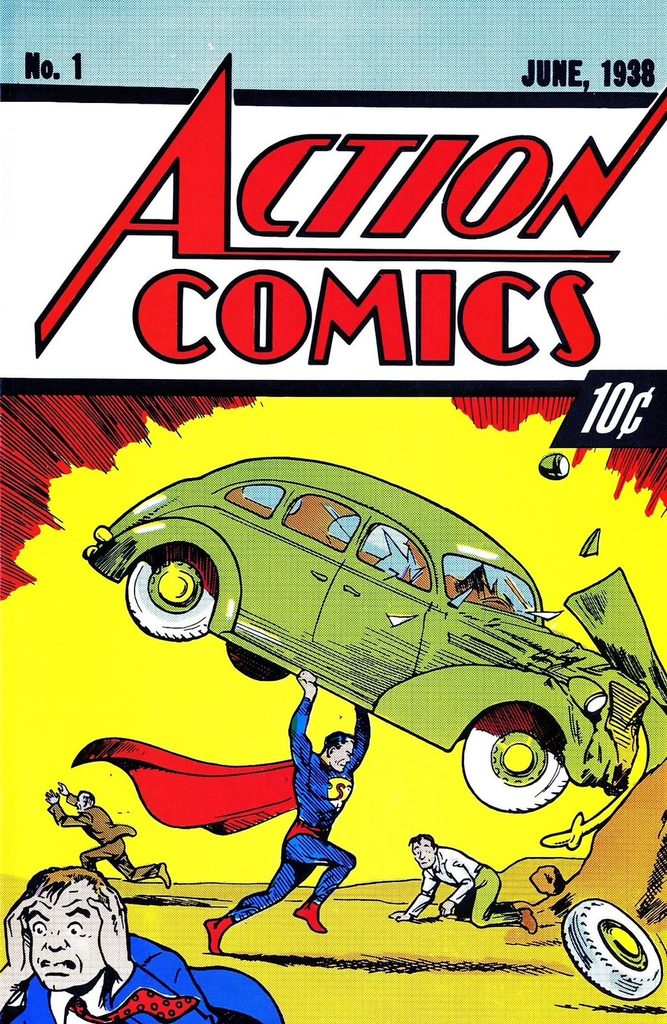
The Action Comic Issue#1 Cover from 1938 (Photograph: Amazon)
Superman first appeared in Action Comics #1 in June 1938, the invention of two Cleveland teenagers, Jerry Siegel and Joe Shuster, who sold him for $130, roughly the price of a decent coat. He was not, at first, a symbol of hope. He was a Depression creature, a champion for people who had none, and he spent his early career dragging crooked officials into court. The idea that the “S” stands for hope arrived later, delivered to the multiplex, improbably, by Zack Snyder’s Man of Steel. I find that reassuring. Myths are usually assembled after the fact by whoever needs them. What endures is the question the character poses: given the power to do anything, what does he choose? He chooses to help. The flying is merely how the movie keeps you awake.
That is why cinema matters more in a bad world, not less. Hollywood did some of its best business through the Depression, and Preston Sturges built Sullivan’s Travels on the argument that offering people relief is no betrayal of seriousness. That argument has only grown truer in this age of dystopia. Escape is not avoidance.
And what one film proves, Hollywood copies. If Gunn’s Superman is read as proof that hope sells, the industry will chase it, and the cinema of the next few years may turn a little kinder. If it is read as a miss, by a studio carrying a heavy debt and wanting a bigger number, the lesson runs the other way, and nobody will run the experiment again. That is the real cost of this change of command.
Snyder’s films asked what a god costs us; Gunn’s asked what a god might do for us, and the mythology is big enough for both questions. His hero is earnest, which in a landscape of brooding men and collapsing skylines was practically bad manners, and I have rarely enjoyed bad manners so much. Being kind, it turns out, is the real punk rock after all (nerd tears). The film was not flawless. But it picked a fight with the world it was released into, and it escaped the theatre, its colours and songs turning up everywhere. That is a kind of success no ledger measures.
The Man of Steel and the Men in Suits
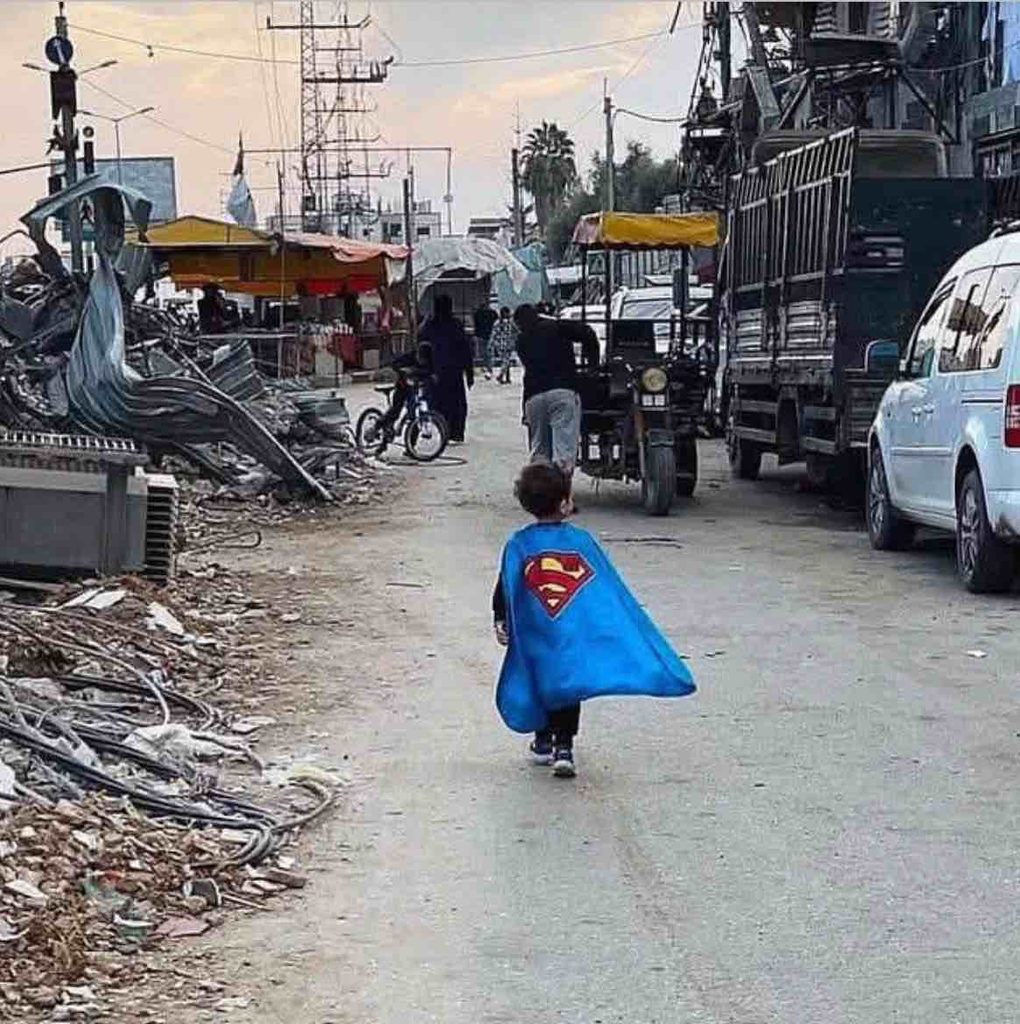
Superman has always served as a symbol of hope (Photograph:@mundosdadc/Instagram)
The ledger kept its own account. Superman took in $618.7 million worldwide, handsome but short of the genre’s biggest hits. Supergirl was panned and earned about $126 million against a $170 million budget, while Clayface, a far smaller picture, has grossed around $109 million, which is what happens when you ask a C-list Batman villain to do an honest day’s work. On television, The Ringer’s account has Peacemaker’s second season flopping and Lanterns landing as strong but not sensational. And Batman, the one character who sells tickets on his name alone, is still years from his debut in the new universe.
That last absence is the crux. Variety reported that insiders questioned Gunn’s decision to build around lesser-known characters rather than marquee names. The charge is fair, and so is the defence: a universe can’t grow if it only revisits its most famous residents. (Marvel, remember, launched its own empire with Iron Man, then a B-lister, not Spider-Man.) But there is a difference between patience and an affection for Polka-Dot Man, and an owner with a big debt will find it quickly.
The Ringer’s reconstruction of the palace intrigue supplies the rest. Gunn and Safran reported directly to Warner’s former chief, David Zaslav, under contracts that promised less oversight than Skydance’s film chiefs wanted. They were used to autonomy, and Skydance was not inclined to supply it. Anonymous accounts of such things are always partly score-settling, and The Ringer says as much, but the shape is plain: a mixed record, a clash of clans, an owner with different taste. Gunn’s farewell said he was “relieved” to be returning to filmmaking. That is true in both senses of the word.
The room the suited men are sitting in is a crowded one. On 6 October, Paramount Skydance completed its acquisition of Warner Bros. Discovery, a deal valued at about $110 billion including debt. Estimates of the resulting load vary: one account says $79 billion, while Fitch’s is closer to $87.5 billion. In return for regulatory approval, the company promised something worth crediting: at least 30 theatrical releases a year, rising to 32, each with a 45-day exclusive window in cinemas. David Ellison, Skydance’s chief executive, told exhibitors, “Long live the movies.” I believe he means it, the way a man with a mortgage means it when he praises the neighbourhood.
But do the maths. Last year Warner Bros. released 11 films and Paramount nine, so the pledge demands far more cinema than the two were making together. Thirty is not a slate. It is a quota, and a quota in a company that owes the price of a small country is never met by waiting for the muse. You meet it by greenlighting whatever arrives on time and recovers its costs, which tends to resemble whatever came before. In the comics, Brainiac is the villain who shrinks cities and keeps them in bottles. I’m told he would make a very efficient acquirer. Efficiency is a virtue in a factory and a hazard in a studio, where the apparent waste is often where the interesting work lives: the film that needs two years to find its audience, the character who sells no toys, the gamble that either flops or becomes the thing people quote for decades. Warner has seen that before. So have we.
Read the full statement below.
The Fortress of Grandmas
Latcham’s credentials are formidable. His Marvel credits include Iron Man, The Avengers, and Spider-Man: Homecoming, films that helped build the most lucrative franchise in cinema history. He has spoken of his faith, of wanting hopeful, redemptive films, and of a question that guided him at Marvel: would my grandmother like it? As a rule of thumb, it deserves more respect than it gets. Plenty of films fail because their makers forgot that someone has to sit through them. Nothing in the public record suggests he intends to sanitise DC. Grandmothers, in my experience, are also considerably tougher than studios give them credit for. Mine has sat through worse. But rules of thumb harden into policy, and DC is the worst place for ceilings. This is the house of the Joker, Swamp Thing, Constantine and Clayface, a neighbourhood no responsible landlord would call safe. And hope as the only permitted destination is not hope.
The Light of Tomorrow
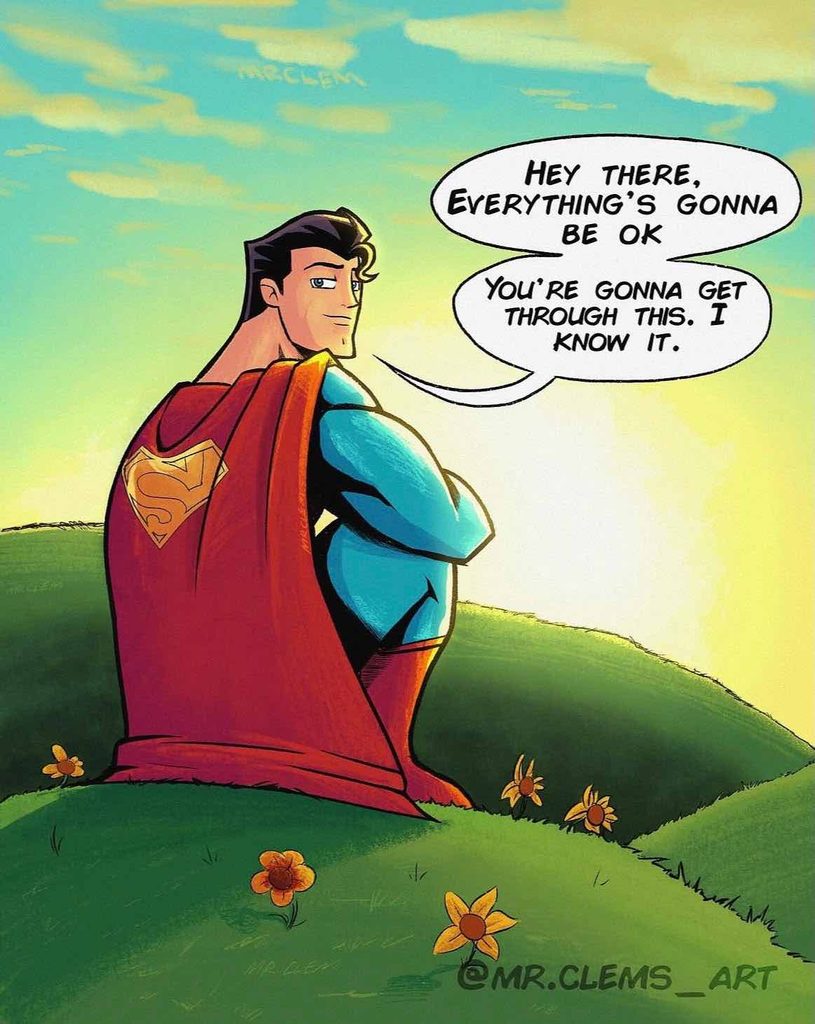
That hope is you, Kal-El (Photograph: @mr.clems_art/Instagram)
Gunn and Safran are expected to remain involved with Man of Tomorrow and The Batman: Part II, and the Superman sequel is set for July 2027, so the verdict is not in, and I am not yet entitled to despair. I am entitled to a Diet Coke, though, and I’m taking it. My commitment to sugar is what DC’s has been to its creators, which is to say none. I, for my part, remain loyal to both, in the hope that I’ll live long enough to see an established DC Universe.
Thousands of years ago, people told stories about gods to explain a world that made no sense. The stories were never really about the strength. They were about what a being with all that power might decide to do with it. Siegel and Shuster sold their answer for the price of a decent coat, and everyone who has owned it since has spent nine decades discovering what it’s worth and, with less success, what it’s for. I intend to go on believing it is something good, partly out of habit and partly because the alternative is to stop going to the cinema, and I am not ready for that. There is a quiet in a dark theatre just before the lights go down, when hundreds of strangers agree, without a word, that someone might do the right thing when no one is watching. A corporation can count the strangers. It cannot count the belief. I’d only ask it, as politely as a fan with a Diet Coke and no standing whatsoever can, to leave some room.
The lights are still down. Someone, somewhere, is about to show up.