
Science fiction has always known how the world ends. There’s the alien invasion, the rogue supercomputer, or the scientist who says “what’s the worst that could happen?”, which in this genre is the equivalent of a man in a horror film saying “I’ll just check the basement.”
And, ladies, gentlemen, and gentlethem, that’s the movie Luca Guadagnino has made, and it’s a pip. The man is Sam Altman. The film is called Artificial, and this muddled tech satire of a story “is not (in fact) a work of speculative fiction.”
Altman is the CEO of OpenAI, the man who helped open Pandora’s box, and he is back in the public eye after being fired and rehired within five days in 2023, a turnaround that would shame most tailors. Now he has a biopic, Artificial, directed by Luca Guadagnino, written by Simon Rich (a New Yorker essayist, so yes, he knows exactly what he’s doing), and starring Andrew Garfield, who has been cast as the devil before and clearly enjoyed the commute.
It premiered on October 25 at the New York Film Festival, opens in the United States on Christmas Day, and rolls out worldwide on January 8, 2027. I have never been so eager to be sold a ticket to my own obsolescence.
The movie’s Altman is the old sci-fi figure we know from Frankenstein on down: the creator who bets the house on a technology he doesn’t quite understand, waves off the researchers trying to explain what could go wrong, and insists it’s all for the greater good.
When the researchers bring up AI hallucinating, lying, and generally developing a mind of its own, the future of humanity is apparently no match for a man with a matcha. Victor Frankenstein at least had the decency to be miserable about his creation. Garfield plays him as a choirboy with an agenda, all upspeak and hunched solicitude. The performance is slimy in the best sense. What follows is a comedy of manners, and the manners are terrible: where a man being briefed on the possible consequences of artificial intelligence is too busy, legs crossed, matcha in hand, playing Candy Crush on his iPhone.
The critics have mostly been kind, and some a little scared. It’s at about ninety-five percent on Rotten Tomatoes and seventy-five on Metacritic.
It’s a satire with no doubt that its man is an amoral manipulator, and that’s where I have to take my gloves off, because a thesis isn’t a finding. Altman reportedly called the picture not very good, and some fans take that as proof the portrait is dead-on. Heads I win, tails you’re lying: the oldest trick in the dramaturgical book, and a movie that treats every denial as a confession hasn’t made its case; it’s just announced its verdict. I resist that. I would also like to fly to the US to see the movie as soon as I can, which tells you what the resisting is worth.
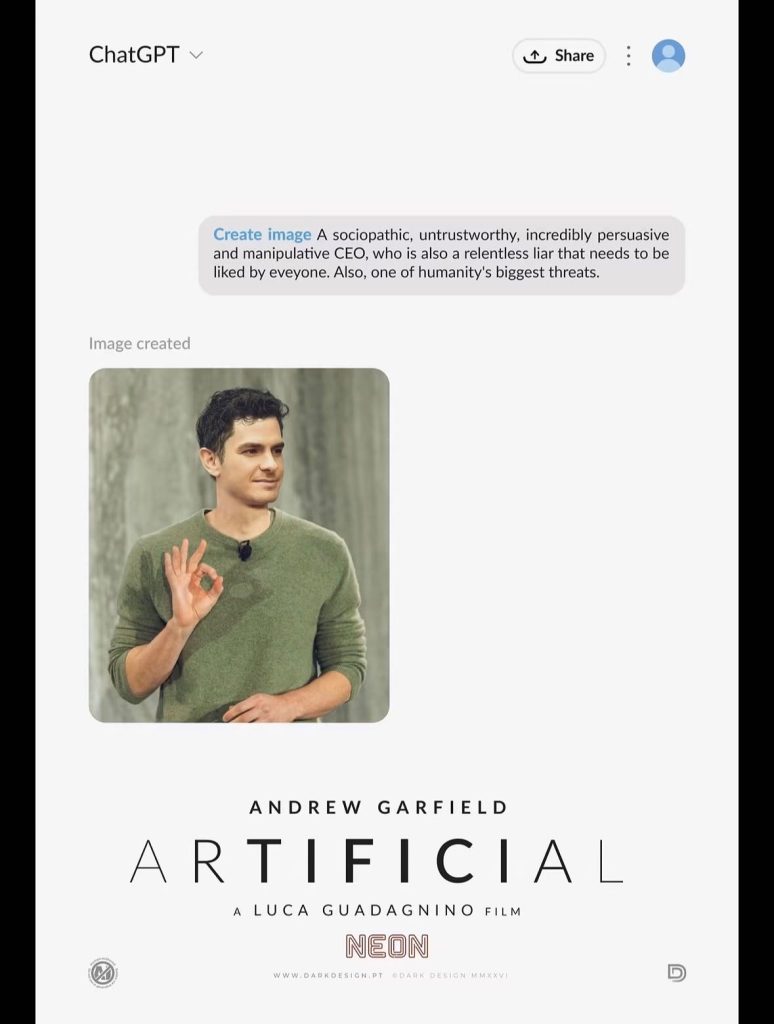
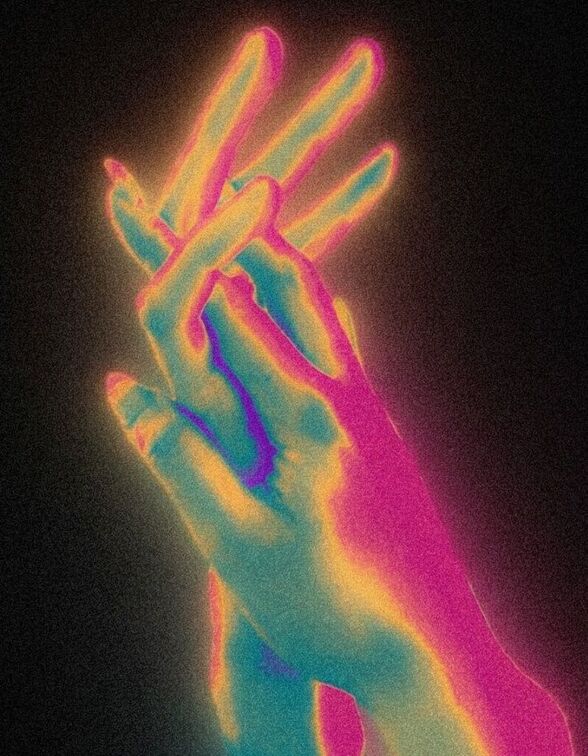
A fan-made Artificial poster following the official poster release (Photograph: @neon_posters/Instagram)
Altman, meanwhile, has been busy making his case. Vanity Fair, living up to its name, put him on the cover as the Oppenheimer of his day. In an interview, he said we should be prepared to accept some “bad things” in exchange for AI’s benefits. But the things in question are as bad as things can get. Studies suggest that leaning on these tools may be walking us toward something called cognitive surrender, which doesn’t sound like the best use of your one wild and precious life.
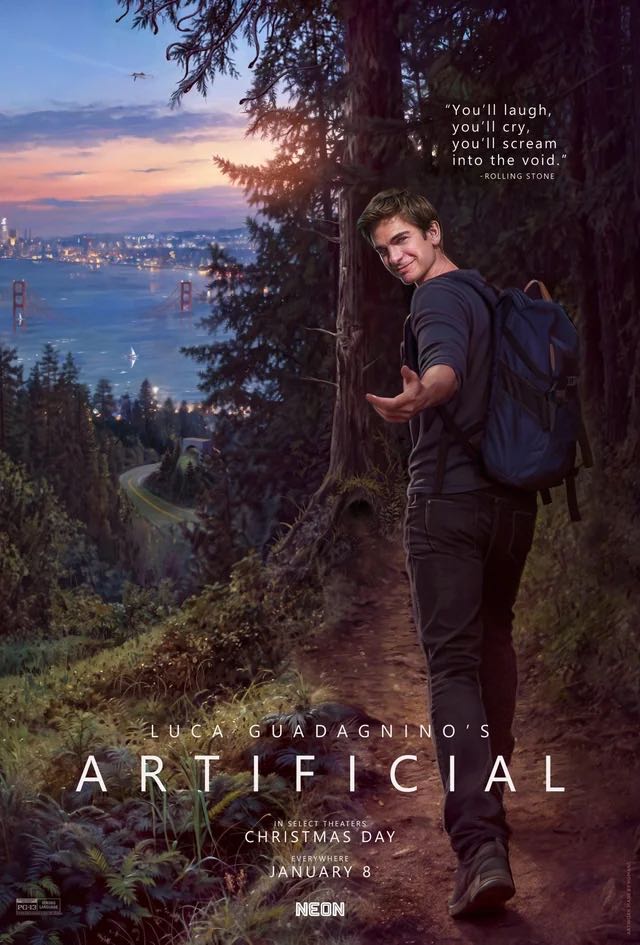
The best thing in the whole business may be the poster, which commits the movie’s crime out in the open. At first glance, it looks AI-generated, and you can hear the internet sharpening its knives. Then a clip surfaces showing the thing being drawn by human hands, those of illustrator Mike Thompson, and the joke turns around and bites. The watermark in the corner, which says the artwork was made by humans, is proof that humans can still mimic AI better than AI can mimic humans.
Now you see it again, and you see the genius of it. A tree wears Pinocchio’s face, nose and all, a lying joke and probably the most unsubtle one I have seen. A plane hangs upside down in the sky. Snakes writhe in the tree where a branch should be. The walkway marches with great resolve toward nothing but a hole the size of a coin. A winding road runs into a tunnel blocked by what looks suspiciously like a planet. The Golden Gate Bridge has sunk, and the water runs over the roadway. (Water under the bridge? Probably what Altman expected). There’s a face that’s almost Garfield’s, but not quite, which is the most effective unease in the picture. And on the backpacks, some letters don’t spell anything, the gibberish that AI so often produces. Every one of those mistakes was made on purpose, by a person with a pencil and a sense of humor. Which, in a film about artificial intelligence, may be the most intelligent thing of all.
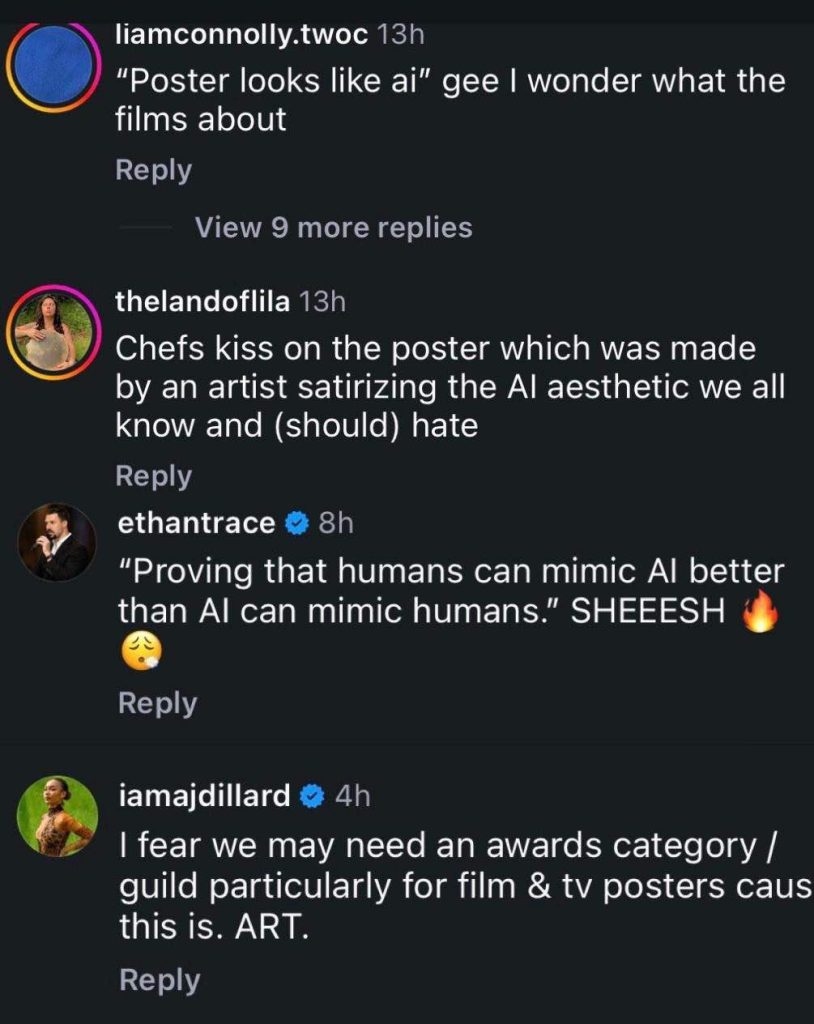
Some of the reactions to the Artificial‘s poster on social media (Photograph: Instagram)
So, dear human reader, enjoy the show, while you can. The trouble with science fiction is that it has a habit of becoming news, and ours, it seems, already has. The monster, after all, is never quite what we feared it would be. Frankenstein’s creature wanted a companion, Pinocchio wanted to be a boy, and our newest creation wants to be everything. The frightening part isn’t that machines might one day become indistinguishable from us, but that by the time they do, we may have forgotten what made us human in the first place. So go on, see what a story made by human hands looks like, for you don’t know when it might be the last time.