
I’ve staged photographs to look candid. I’ve taken several shots, adjusted my posture, and picked the one that looked like someone had caught me off guard. Even on a family trip, putting together a photo dump takes some thought. I carefully chose pictures of everything, the food, the scenery and myself, arranging them to make the trip look like a collection of effortless memories. I’ve held back opinions because I knew relatives, friends, or colleagues might see me differently. Sometimes I think about how something will look on my Stories before deciding whether I even want to post it.
Have we reached a point where even living a normal life feels like a performance? We go to a cafe and think about the pictures we’ll take before taking the first bite. We buy things, thinking about how aesthetically they will look on Instagram.
There’s nothing wrong with sharing life online, but I wonder whether we do it because it makes us happy or because we do it for others. It’s as if showing people we have a good life is almost as important as actually having one.
Being Authentic Can Become a Performance Too
Today, everyone seems to want to be authentic. We admire people who are confident, unfiltered, emotionally honest, and comfortable in their own skin, but can authenticity become another image we maintain?
Think of someone who carefully stages a photograph to look spontaneous, a fake candid, so to speak. Or someone who insists they don’t care about other people’s opinions. Even being different can become a way of seeking approval.
At the same time, we can’t judge someone by their posts, because we don’t know their intentions. A beautiful photo can be a genuine moment, just as an ordinary one can be carefully staged.
Research suggests that people whose online self-expression closely matched their real personalities also reported greater life satisfaction. A smaller experiment in the same study found that participants were in better moods when they posted authentic content.
We don’t need to stop caring about how we look or what people think. We can love fashion, fitness and motorbikes, enjoy taking photographs, and feel good when people appreciate our achievements, and none of that makes us fake. The difference lies in whether we genuinely enjoy these things or feel we have to do them to maintain an image.
The Audience in Our Heads
Sometimes we stop ourselves from posting on social media because we wonder what our relatives, friends, or family will think. Perhaps we never voice opinions because we think they wouldn’t fit the image people have of us.
Social media puts different groups of people in the same space. Friends, parents, colleagues, strangers…all of them can see the same post, even though we present different personas to each of them in real life.
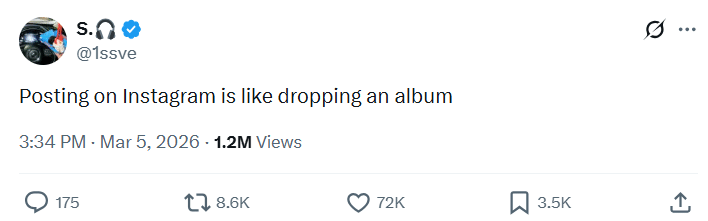
Research describes this as the “imagined audience”: people picture who might be watching online and adjust their content accordingly. That imagined audience can shape our decisions and push us to seek approval instead of asking whether we genuinely like something.
Nobody tells us to be performative. We lean towards doing everything. And that’s perhaps the strangest part of performative living.
Is Our Life Less Interesting Than Everyone Else’s?
Is Our Life Less Interesting Than Everyone Else’s?
Imagine opening a social media app and seeing someone land a great job; another person travelling the world. Someone is getting bigger muscles, wearing expensive clothes, and chilling in beautiful cafes.
Then there’s you, sitting in your room, wondering, “What the hell am I doing with my life?”
That’s where the problem starts—comparing someone’s best moments with your everyday reality. You see them roaming the streets of Paris and Milan, but you don’t see the money they’ve spent. You see them getting a good job, but you don’t see the rejections that came before it. You see their perfect pictures, but you don’t see how many images are in their delete folder.
This is where social comparison comes in. It simply means we judge our own lives by looking at others.
A 2022 review published in JMIR Mental Health found an association between problematic social media use and depression, anxiety, and stress. This is a correlation, not evidence that social media use causes these issues. It’s also vital to differentiate between problematic and typical social media use.
Our relationship with social media is important. When scrolling isn’t enough, we may begin altering our lives to keep up with people we see on our screens, often without truly knowing them.
We sometimes force ourselves to buy things we can’t afford, pick up hobbies we don’t enjoy, and even look happy when we are having a difficult time. We can spend too much time trying to prove that we are living well, and we don’t ask ourselves what living well means to us.
It’s Not About Social Media Only
Humans have always cared about how others see them. We dress differently for job interviews, behave differently around people who are new to us, and speak differently with our friends and family.
I’m also careful about what I share about my family on social media. I might post a picture with them during a wedding or a family trip, but that doesn’t mean I want to share every family photo online. Some things feel better when they stay within the family. I don’t think keeping those moments private makes me any less authentic. It’s simply a boundary I chose to maintain. Being genuine online doesn’t mean giving everyone a window into every part of my life.
Sociologist Erving Goffman explored this in his book The Presentation of Self in Everyday Life. He compared social interactions to theatre, where people manage the impressions they create in front of others.
That doesn’t mean we are all pretending. We naturally have different shades of our personalities.
Social media has made this process constant and more visible. Our moments can be photographed, edited, posted and measured through likes, shares and comments, and our lives can start to feel like a brand that needs regular updates. The pressure is to show everyone an interesting life, even when it isn’t.
What if Nobody Could See It?
A simple thought experiment can help: would I still do it if I couldn’t post about it?
Would I still read that book, go to the gym, visit that hill station or support that cause if nobody knew? Would we still enjoy a hobby if it never became part of our online lives? Our lives should be a collection of things we do for ourselves, not for other people’s approval.
We don’t have to photograph every happy moment to prove it happened. We don’t have to turn every hobby into an achievement, or look happy, successful or interesting every day. Some days we’ll be excited and some days bored. Sometimes we’ll achieve something wonderful, and sometimes we’ll spend the day rotting in bed. That’s how life is.
I don’t think the point is to stop performing. We’ll always care, to some extent, about how others see us. We’ll keep sharing photographs, celebrating wins and showing different sides of ourselves to different people.
The goal is to notice when the imagined audience begins making our decisions for us. When we choose what to wear, what to say, where to go, and even what to enjoy based on how someone else might perceive it, it’s time to step back.
We have to live our lives, not just keep them looking interesting for the people watching our Stories.