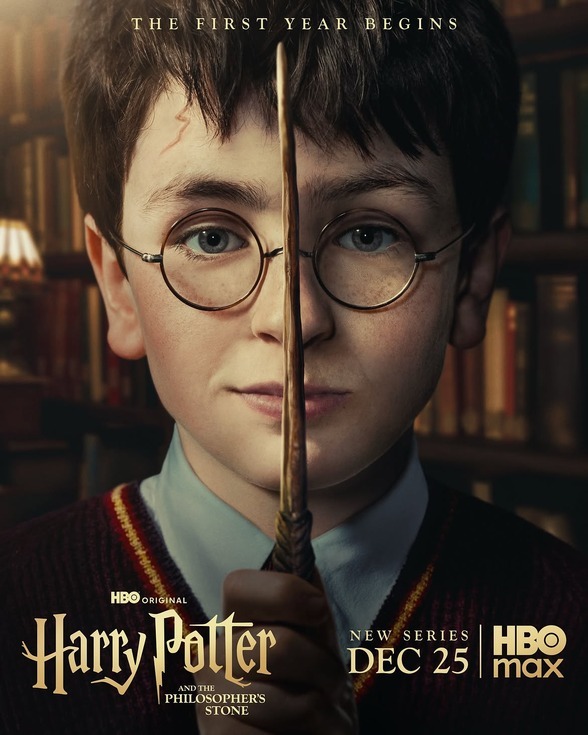

The discussion that started after the release of the first scene of the new Harry Potter and the Philosopher’s Stone earlier this month has brought out two very different sides of the fandom.
On one side, Potterheads are questioning the need to shoot the entire series again. They argue that we have already watched the films, grown up with the characters, and spent years associating certain actors with the world of Hogwarts. So, why do we need another version?
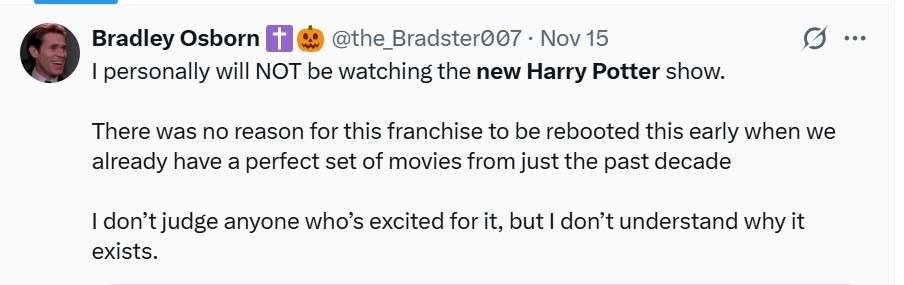
On the other hand, there are people questioning why we are so bent on restricting ourselves from experiencing something new. Just because we’ve watched one version of a story doesn’t mean we cannot enjoy another interpretation of it.
But this is a valid question. Why are we not as open to remakes of Harry Potter, or any other cult film, for that matter?
Why does seeing a new actor play a character we’ve known for years feel so uncomfortable?
A 2018 paper published in Poetics, titled Blissed by the Past: Theorizing Media-Induced Nostalgia as an Audience Response Factor for Entertainment and Well-Being, by Tim Wulf, Diana Rieger, and Josephine B. Schmitt, gives an angle to it.
The researchers explain how revisiting media content from the past invokes nostalgia, which serves three important functions: self-oriented, existential, and social. In simpler terms, these experiences help us reconnect with who we were, find meaning in our lives, and feel closer to people we associate with those memories.
For someone who grew up watching Harry Potter films, Hogwarts might remind them of school holidays, family movie nights, or discussing their favourite characters with friends. For some, it might have been the first fiction book that they would have read. The experience is not limited to what happened on screen. It is also about everything that was happening in their lives when they first encountered it.
This is probably why a new adaptation can be difficult to accept. We already have an image of what Hogwarts looks like.
We remember how Dumbledore adds extra points to the Gryffindor team, and how emotional Snape’s Patronus charm was.
A different cast, visual style, or interpretation will definitely make us a little uneasy.
It might be the reason why the resistance comes. We are comparing it with an experience that has been attached to our memories for years.
But is nostalgia the only reason?
The Business of Bringing Old Stories Back
The original eight Harry Potter films, released between 2001 and 2011, collectively earned approximately $7.7 billion at the worldwide box office. Harry Potter and the Deathly Hallows: Part 2 (2011) alone brought in around $1.34 billion, making it the biggest earner in the film series.
We don’t need to explain why studios would want to revisit the franchise. There are books, merchandise, LEGO sets, video games, theme parks, studio tours, and countless other experiences built around the Wizarding World. The franchise has created an entire commercial ecosystem, with different businesses benefiting from its continued cultural relevance.
And now, HBO is making another massive investment in the same world.
According to financial filings reported by TheWrap, an investment of around $200 million has been made, although HBO has not officially confirmed the final production budget.
So, while some fans might be questioning why another Harry Potter adaptation needs to exist, the studios prioritise the commercial potential of a story that has already proven itself.
Isn’t this an example of great strategy? You sell to an already existing and loyal audience.
It does matter what we think of the new series. It matters if we like the casting, the costumes, and the cinematography. We can choose not to watch it, criticise it, or continue returning to the original films. But our attachment to the original does not necessarily change the business decision being made here.