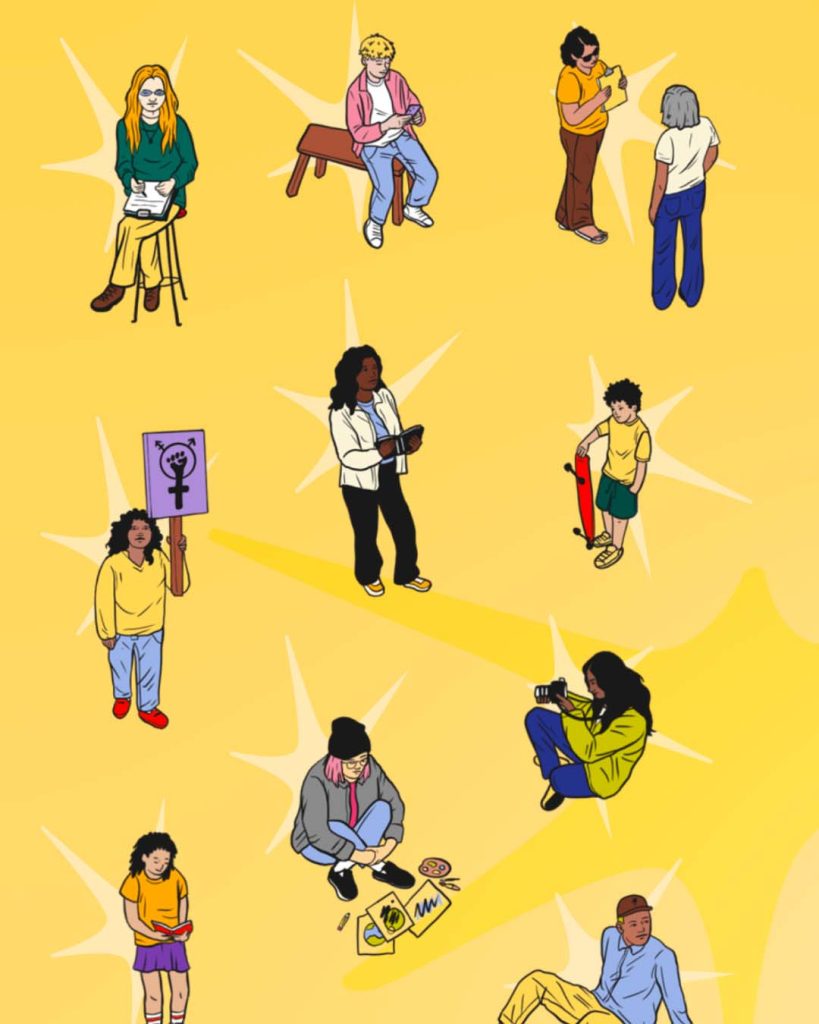

Amnesty International released a new global briefing, Sparking Change: Children’s Right to Protest–A Perspective from Children and Young Activists, on 19 November. It documents the human rights violations and barriers children and young people face when participating in protests, drawing on research involving more than 500 young people across 12 countries.
The research was developed in partnership with the Spark Club, a group of young activists from around the world working with Amnesty International. The research includes activists aged 11 to 17, from 12 countries. The briefing also draws on the experiences of 517 questionnaire respondents, whose self-reported ages ranged from 13 to 24.
The countries covered in the research are Argentina, Belgium, Chile, Colombia, Ireland, the Netherlands, New Zealand, Palestine, the Philippines, Puerto Rico, South Africa, and South Korea.
What Were the Key Findings From the Research?
Most of us must have heard this while participating in, or even discussing, a protest in our respective countries. But isn’t that precisely why people continue to raise their voices?
Amnesty’s report highlighted how the young people who participated in the research were motivated by the desire to have a positive impact on other people’s lives and their surroundings. Some were driven by their principles and the belief that protesting was the right thing to do, while others wanted to increase public awareness, call for positive change, or speak out against violations of their rights.
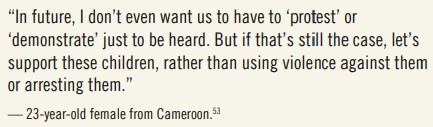
The first finding was that young protesters want people to take them seriously, rather than simply offer them a token of appreciation for speaking up. Their thoughts and voices should not be dismissed just because they are children.
The second finding from the research suggests that parental support is one of the important influences on children’s and young people’s involvement in activism and their continued participation over time.
The third finding of the research was that safety is a major concern for children who wish to protest. Most of them fear violence from law enforcement and the possibility of an arrest.
The possibility of violence from police or law enforcement was a barrier for 216 out of 468 respondents, while the possibility of arrest was a barrier for 208 out of 468 respondents.
The fourth key finding was that online spaces can also become important spaces for activism, but because of harassment, it is still a barrier.
Of the respondents, 264 out of 347 reported feeling safe while protesting online, compared to just 126 out of 288 who reported feeling safe protesting offline.
Of course, online hate and harassment can weaken their determination, but digital spaces still offer young protesters another way to participate, connect, and make their voices heard.
The fifth key finding brings us to something that should matter to everyone, regardless of their stance on protests.
It does not matter if we support a particular protest or disagree with it; access to information is vital to forming and analysing our opinions. Mentorship can help children understand their rights and the different ways in which they can participate in protests.
But What Led Amnesty to Conduct This Research?
The use of water cannons, the leaking of someone’s personal information online, exposure to harassment and moral policing, and the large-scale use of rubber pellets have become familiar features of how protests are handled in different parts of the world.
For example, in Iran, security forces have used military-grade firearms, beatings, and other forms of lethal force during nationwide protests, including the ‘Woman, Life, Freedom’ uprising and subsequent demonstrations.
We have also seen what has happened in India this year. Amnesty International documented the use of pellet-firing shotguns, tear gas, and firearms by law enforcement during demonstrations, including protests led by the Cockroach Janata Party (CJP).
The same resistance was faced in many other countries like Kenya, Tanzania, and Indonesia.
Young people may believe that if they are unhappy with a law or a system, they have the right to question it and the power to push for change.
They imagine a world that reflects their ideas and demands. But when they attempt to exercise that right, they are met with violent retaliation from those in power.