
Every high school drama ever has this phase.
The girl falls in love. Screws up a little. Gets her heart broken. Cries in giant hoodies for three episodes straight. Then suddenly she’s in a new city, sitting in a café alone while journalling. All of this happens until she becomes herself again.
Like Belly in The Summer I Turned Pretty [2022], going to Paris after everything falls apart. Or honestly, every coming-of-age show where the Universe watches your nonsense for a while and then goes: enough. Identity shift time.

For the longest time, I thought this was fictional behaviour. Pretty lonely. Cinematic healing. A rich-white-girl-with-soft-lighting problem.
Then it happened to me. Not the Paris part. The horrifying “I can no longer peacefully exist around myself” part. And I think that phase changes you more than heartbreak itself.
I Had Three Apartments and Zero Boundaries
I don’t think I had ever truly been alone before I moved out.
Before that, there were parents. Indian parents specifically, which means love, concern, protection, and someone calling you seventeen times if you don’t pick up once, because obviously you’ve either been kidnapped or died.
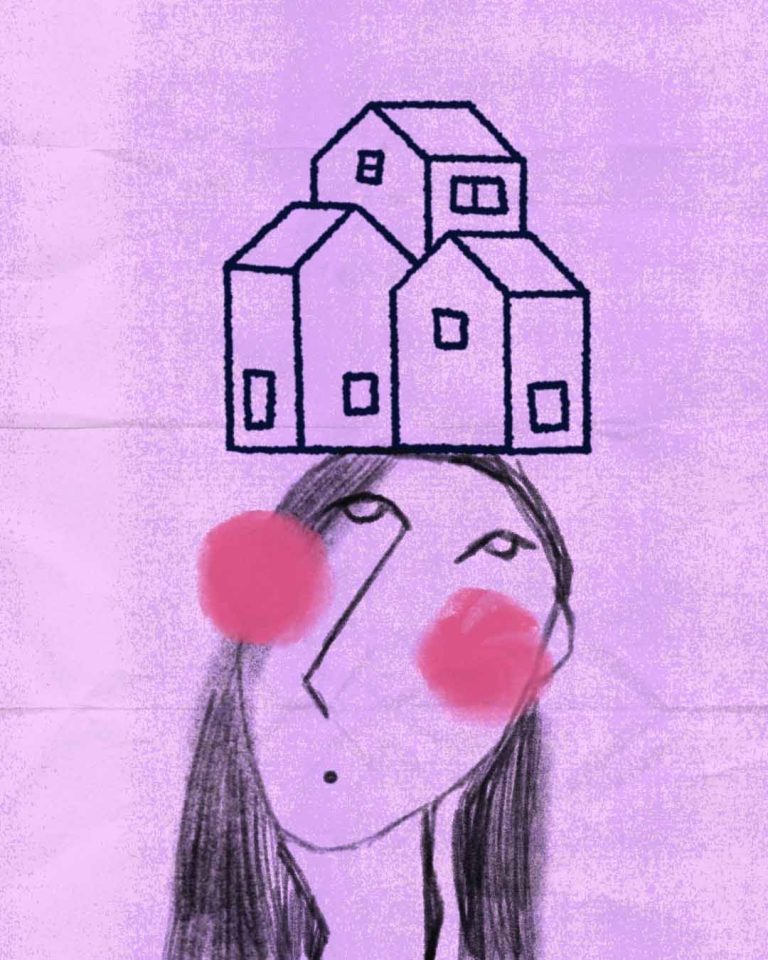
Even after moving out, I always had people around. I lived with my high school best friend (let’s call her M). Then there was S, my oldest friend from school, who had re-entered my life after years and somehow became part of the ecosystem too. She lived far, and I travelled to see her constantly because her apartment had something ours didn’t: freedom. Her place felt airy and warm, like you could breathe there. Then there was A, from college: we attended lectures and did assignments together, and clicked because she knew the pain of fashion college.
I was the common denominator between all these people. None of them knew each other well at first, but slowly everyone merged, which meant someone was always with me. And listen, it was fun. Truly. We were young, chaotic, and constantly moving. At one point, we had three apartments between four girls: one day at someone’s place, another day at someone else’s. Sleepovers, tea, fights, random boys, more random boys, loud music, louder conversations.
But here’s something nobody tells you about being the ‘easygoing’ friend: if you struggle to say no, people slowly start occupying your life without even meaning to. And one day you wake up emotionally exhausted because you haven’t heard your own thoughts properly in months.
The Pandemic Said: Character Development
Then COVID happened, which feels like the opening sentence to every Gen Z trauma story.
People drifted. Relationships changed. We all had to grow up very quickly and separately. M got into a serious relationship and wanted to move in with her boyfriend, while S and A wanted to move in with me. I agreed initially because that’s who I was: a human yes button.
But somewhere in between, things shifted. Friendships cracked in quiet places, and the vibe became off in ways too complicated and boring to explain fully. And honestly? I was relieved when it fell apart. I loved them deeply, but I knew I could not survive living like that anymore.
I couldn’t handle clothes permanently living on sofas (and that’s the tiniest of filth), random groups of people entering the house every second day, hair everywhere except people’s heads, and constant ‘let’s go here’ and ‘let’s do this.’ I couldn’t focus on my assignments, my college, or myself.
Their presence started giving me actual nausea, which sounds dramatic until you’ve experienced emotional overstimulation so intense your body physically rejects it. And suddenly, for the first time in my life, I was alone. Truly alone.
I Accidentally Fell in Love With Myself There
At first, I cried. I cried because nobody was around anymore. Then I cried because I realised I liked it. That part felt illegal somehow.
The second wave of the pandemic happened, and I went back home for a while. But when things started reopening, I fought HARD to return to Pune. I convinced my parents by using internships as an excuse; the internships were real, by the way; I was not a girlboss lying. And when I finally came back, I hugged my apartment. Actually hugged it.
That tiny place felt like proof that I had built something for myself, and God, I loved it. The rent was still cheap because post-COVID landlords were also going through emotional damage. I had flexible work timings, new friends, new routines, and a cute guy I had started talking to during lockdown. Life felt soft around the edges again. I would come home excited. Excited. Do you understand how rare that feeling is?
I worked out in the hall, built a Netflix nook, watered my plants like they paid rent, played music while cleaning, took ridiculously long showers because I was obsessed with my bathroom, and rearranged corners for no reason except serotonin. I sat under fairy lights pretending I was in a Paris apartment instead of Pune with questionable plumbing.
Slowly, I started loving my own company, not in an ‘I have healed’ way, but in a very ordinary, deeply personal way. I liked knowing my friends existed somewhere in the city, but I loved coming home to myself.
There’s this thing psychologists say: that intentional solitude calms your nervous system because your brain slowly stops associating aloneness with danger. At the time, I didn’t know the science. I just knew peace had entered my body.
Woh kehte hai na, jab life mein sab theek chal raha ho toh chul machti hai [You know how they say, when everything in life is going fine, you get an itch to stir things up].
My apartment should have been enough, but life started nudging me elsewhere. The commute to work (my first job, after internships) became horrible; I would leave early, come back around 9, exhausted, then clean, eat, sleep, repeat. Then came water shortages, because old buildings apparently wake up every morning and decide which new problem to develop. Somewhere in the middle of all this, I also started feeling guilty about my rent, because the landlord had never increased it after COVID. But honestly? There was another thing quietly happening, too.
I had become too comfortable there, which sounds ridiculous because isn’t comfort the whole point? But I had built such a perfect little cocoon around myself that the idea of being left alone inside it suddenly started scaring me. My job was far away, my best friend at the time had already shifted closer to my office, and my boyfriend had started apartment hunting too. Somewhere deep down, I think I was scared that if everybody slowly drifted elsewhere while I stayed back in that apartment alone, the magic of it would disappear too.
Everything slowly pointed toward one thing: move.
Practical.
Romantic.
Financial.
Emotional.
Like life itself was nudging me toward the next chapter. Then my boyfriend started apartment hunting properly. And I did too. We moved in together.
It felt romantic, mature, and just…right. Like the next chapter, and for a while, it genuinely was beautiful.
Then Love Entered Very Politely and Ruined the Ecosystem
So yeah, the cute guy had become my boyfriend.
The boyfriend became my live-in partner. And slowly, so slowly, my life stopped belonging entirely to me. Not in a toxic way. That’s what makes this harder to explain.
It happened lovingly. We cooked together. Cleaned together. Gymmed together. Worked together. Ate together. Travelled together. Napped together. God, especially the naps. And here’s the thing about love nobody warns you about: dependency doesn’t arrive dramatically.
It arrives chemically. First, you lean a little.
Then someone starts helping with your commute. Then someone starts waiting for dinner with you. Then suddenly, all the rituals you built alone become two-person rituals.
And when someone keeps telling you “you don’t have to do everything alone anymore,” a part of you relaxes so deeply you don’t realise how much of yourself you’ve handed over.
I still liked being alone then. But not the same way. The girl who once cancelled plans because she wanted alone time was slowly disappearing. And the scary part?
I didn’t notice.
Nobody Talks Enough About How Physically Horrible Heartbreak Is
We broke up once. Got back together. Then broke up again for real, and this breakup destroyed me in a way I genuinely didn’t see coming, not because heartbreak was new, but because I had unknowingly lost my ability to exist peacefully with myself.
This wasn’t a relief, like it had been when my friends left; I felt like I had ruined something so good.
The first night after it ended, I had a panic attack. The night lamp started scaring me because its light reminded me of the conversations that ended us. I slept in the hall for days because my bedroom felt emotionally haunted, with too much of him still in it. What made it worse was knowing he had found someone else emotionally before fully leaving me.
People love closure. I hate it. I wish he had just vanished instead. Some nights, I cried so hard it genuinely felt like someone had reached inside my chest through my throat and crushed my heart with their hands.
And the most terrifying part wasn’t losing him. It was this: I could no longer be by myself. The same girl who once loved solitude now needed constant noise to survive. TV sounds weren’t helping anymore, music wasn’t helping anymore, nothing was helping anymore.
The Night I Realised I Had Abandoned Myself Too
My office shifted to work-from-home around the same time, which meant no colleagues, no commute, no accidental human interaction, and no distractions. Then my friends got busy, and my flatmate left for a month. Suddenly, I was trapped alone with my own brain.
I know what you’re thinking: weren’t you the same girl who once loved people leaving so she could finally have space? Yes. That’s exactly why it scared me.
One night, I spiralled so badly that I started calling everyone I could think of just so I wouldn’t be alone. Nobody picked up. Then I did something deeply desperate: I called a man I would never normally call because he constantly hit on me and made me uncomfortable. He took me to a party.
And the worst part? It worked. Not because I liked him, and not because the party healed me, but because there were people around.
That night scared me more than the breakup itself, because I realised I had outsourced my emotional safety entirely.
So I Rebuilt My Nervous System in Cafés
Healing didn’t begin at home for me. It began outside: in cafés, in random communities, in awkward events, in psychology clubs, salsa socials, aimless runs, and stupid little meet-ups where sometimes nothing happened except proving to myself that life still existed outside my sadness.
I started working from cafés because being around people regulated me. Not interacting necessarily, just existing near humans helped.
There’s this thing called the ‘solo table theory’ online: the idea that sitting alone in public without desperately distracting yourself builds emotional confidence. And honestly? I get it now. Slowly, something shifted.
I stopped planning my life around who was available and started planning it around building a life I actually enjoyed living. I romanticised my routines again. I bought scented candles, rearranged my furniture, met new people even if it went nowhere, forced myself outside, planned trips, and joined communities.
I reversed the problem entirely. Back in college, I had too many people around me and craved space; now I intentionally filled my life with enough movement that coming home finally started feeling peaceful again instead of terrifying. And one day, I physically felt it, like a burden leaving my body. I got myself back.
I Let People Be, I Let Myself Be Too
People always tell you to ‘keep yourself busy’ after heartbreak, and in my experience, it works like a charm. So I did; I became busy being more present. Busy enjoying myself, building routines I looked forward to, trying new cafés, showing up to random events that may or may not become core memories, romanticising my commute with good music, organising my room, and finding new corners of myself again.
Because of that, I stopped obsessing over outcomes all the time. If my friends were late, okay, I’d sit with a drink and people-watch. If traffic was bad, fine, more songs for the journey. If a date disappointed me, at least I still enjoyed dressing up and stepping out.
And weirdly, I became softer with my friends too. Earlier, if they didn’t show up exactly the way I wanted, I’d spiral a little, getting anxious, frustrated, and tense. But slowly, their presence in my life started feeling enough. I stopped expecting people to carry emotions that I had to learn how to hold myself.
I stopped needing every experience to ‘work’: Will this be good? Will they disappoint me? Will I feel lonely? Will this be worth it? Now I just let experiences happen: good, bad, awkward, beautiful, boring. Everything became part of being alive.
Once you know you can be okay with yourself, disappointment stops feeling catastrophic. I let people be. I let myself be too. And that kind of calm is a very powerful thing to get back.
I Think the Real Flex Is Becoming Emotionally Safe for Yourself Again
Not independent, not detached, not ‘I don’t need anyone.’ Actually, this whole experience taught me the opposite: people matter immensely, and good people matter immensely.
My friends helped me survive this; their existence did, and so did knowing there were people I could call. But I also learnt something harder: people can support you, but they cannot build your inner world for you. That part is your job. And honestly, I’m glad this happened to me: the heartbreak, the panic attacks, the loneliness, and the rebuilding.
Now I understand the difference between enjoying being alone and feeling lonely, and why your gut should be trusted the first time. Mostly, I understand this: if you abandon yourself long enough for friends or love, eventually you will have to come back home to yourself anyway.
Now, if you leave me alone in a city, I know I’ll be okay. It’s even better at home or in Pune; I can happily enjoy being alone and not feel lonely, because there are beautiful people around me who’d be available at second call, if not first, haha! I’ll find a café, order a beer, open a psychology lecture, and maybe make a friend. Maybe not. Either way, I’ll still enjoy the evening. And I think that’s the quiet kind of confidence every coming-of-age show was trying to tell us about all along.